In the beginning, according to sometimes reliable sources, all was darkness, with nary a photon in sight. Sight itself, in fact, was a rather meaningless concept – concepts of all kinds, in fact, were rather void of meaning – until that moment when the cosmic powers that be, call them what you will, banged in the biggest way possible and in an instant, light was everywhere. After which, in short order, various corners of the universe were playing a light and shadow game, where the dark moments became known as “night,” the lighter moments “day.” So simple!

All of this was never more true than here in the corner of the universe where our beloved terra spins ‘round and ‘round, and days and nights have long simply been the way it is. The length of days and nights can vary greatly, depending on one’s placement down on terra’s surface and where the planet happens to be in its annual solar journey. Add to this the constant changes of weather and the seasons and it is easy to surmise that, like snowflakes, no two days or nights are ever the same.

The plentitude of sentient creatures that came to inhabit terra were likely sensitive to these constant changes, as survival can depend on such things, but such an exquisite awareness of daily change began to lose its edge with the arrival of homo sapiens and the development of so-called human civilization. For however many grand and glorious reasons, at some point it was decided advantageous to label all the days, assigning each a specific month and number, which for many was to become their primary means of distinguishing one day from another, more or less. Though weather and seasonal change can never be completely ignored, rest assured technology is constantly at work to insulate humankind from such external annoyance as much as possible.

Humanity, in its vast cultural wisdom, has also seen fit to designate certain of its labelled days as special, despite the case being made here that every day is unique and special, if you’re paying attention. Civilization being what it is and was, in the beginning “special” days tended to celebrate the glories of agriculture and religion, in an annual sort of way. For starters, in ancient times, when folks first determined the roughly 365-day scheme of things, homo sapiens’ craving for beginnings, middles, and ends dictated that there always be an annual starting point, or “new year,” declared and celebrated in some way.

Despite the prevailing enthusiasm for the Roman calendar’s determination of January 1 as the one and only legit initial day of the “new” year, a quick look around turns up any number of other cultures that would beg to differ. Those of the Jewish faith celebrate their own calendar’s Rosh Hashanah every fall. The Lunar New Year that is celebrated in Asian cultures, coming at the end of January or in early February, heralds the coming of spring. The new year celebration in Pharaonic times occurred in July at Wepet-Renpet, with the flooding of the Nile, a very big deal back then. It might rock your world to learn that even the Romans themselves originally celebrated New Year’s on March first, and the switch to the “modern” date was a cheap political maneuver made around 150 BC.

As for a day heavily freighted with mixed meanings and wondrous cultural complexity, let us consider the recently celebrated Halloween. The day’s childhood iteration we all grew up with – the costumes & candy and sinister-as-fun elements – will likely endure in some form forever, in no small part due to the eternal demands of commerce. So many modern “special” days, with their quaint traditional cultural origins, have gotten steadily corrupted over the years by the market economy’s insatiable demand for expansion of the gross national product. Christmas has long been the poster child for this unfortunate dynamic, but after a slow start, Halloween is playing catchup in a big way. Along with sales of costumes & candy, we now have the endless mania for yard paraphernalia: goofy inflatables and plastic skeletons in all sizes and postures, dragons and ghosts, vampires and zombies offering every home owner the chance to turn their front yard into a hideous but light-hearted stage for spooky expression. As so often happens, commerce crushes creativity in the end, and in most spooky front yards nowadays a dreary sameness prevails.

But not always. The cultural genius of Halloween is that along with the kiddie aspects, there has long been the grown up version, the one that flirts with the Darkness and all that is horrible, grotesque, sinister and outright strange. Fun and disturbing, at the same time – what can be better than that? An early posting on this website, Spooky! We sing thy praises! made a lighthearted and ultimately very confused attempt to tease some of this out, back in those early giddy post-covid days when Halloween yard decor of any quality was an important expression of community celebration. Hey, twenty million of us may have died but the rest of us are still here, free to litter our lawns with skeletons and other grotesqueries! Whoopee!

Halloween’s merging of the darkness and the light is a story with long legs. Christian scholars will tell you its beginnings arose from the tradition of the feast on the eve of All Hallow’s Day. That was a day the church set aside for remembering the dearly departed, or at least those deemed most worthy, which meant saints, martyrs, and the faithful. Part of the meal would be offered to the dead, and ancient Roman belief that souls of the restless and vengeful lurked about added a hint of spookiness. The devoted would attend services and place candles on the graves of the remembered – gestures that were serious and meaningful maybe, but not a whole lot of fun.

The unholy ghosts and the rest of the secular Halloween package we know so well predate the church’s version by many centuries, roots that lead us back to the quaint and innocent and totally charming pagan festival of Samhain. Samhain was agricultural, of course, a harvest festival foremost, celebrated by the ancient Celts. It was all about bringing in the crops that would sustain the community through the coming winter. When all is said and done, is survival not the single greatest thing to celebrate that there is, saints be damned?

As was also typical of early human cultures, the Celts threw in some pagan spirituality, whereby Samhain offered a moment when openings to the spirit world were possible and one could connect with the aos si, descendants of the gods of Irish mythology. Call them elves, call them fairies, just be advised that they represent the powerful forces of nature. Do what you can to gain their favor, and above all do not anger or insult them or you’ll be in big trouble. The Samhain celebrants would appease them with food and drink, light bonfires and slaughter animals, early practices of what in modern times would be called a protection racket. When it comes to survival, you do what you have to do; keeping the higher powers-that-be happy is a no-brainer.

On a less religious otherworldly note, Samhain was also a time when souls of the dead were known to visit, similar to the beliefs of the ancient Romans, evidently a core concept which has morphed into today’s ridiculous abundance of grinning plastic skeletons scattered about yards all across America, if not the world. Those spiritual but fun-loving pagans also came up with mumming and guising, wearing costumes and going door to door asking for food and drink. It has been suggested that disguising oneself was a way to evade the aos si, a belief about which modern trick or treaters are no doubt ignorant, possibly at their peril, but then again, how many of them nowadays are pagans? Might one, were they truly bold, obtain a costume and masquerade as an aos si fairy or elf, or is that a really bad idea for reasons buried deep in Celtic history? Would you consider it, if but briefly?

Homo sapiens are a culturally restless lot and special days like Halloween are consequently subject to ongoing change, not always for the better. The manic growth of yard displays has led to endless new varieties of interpretation. For one thing we’re living in a time of tumultuous and sinister (and perhaps spooky?) politics, and it is not surprising that here and there, messaging about this state of affairs has become part of the day’s decor. Likewise time-honored themes of monsters and horror have begun to edge towards the grotesque and the gory.

The tender sensibilities of a local journalist were recently so offended that he felt compelled to comment on a particularly bloody display of skeletons up the street from his house, hard at work in their bony butcher shop, splattered with blood. Take a look and see for yourself; does it go too far in some way? Might it traumatize the more innocent and protected among the neighborhood children? What about your kids? Does that cooking pot and the chefs’ hats suggest spirits of the dead practicing what looks like cannibalism, and what does that even mean in this context, if it means anything at all? Of course it’s all just in fun, right?


This year’s All Souls/Samhain/Halloween fun-and-spirit fest also offered a couple of new wrinkles. The first was the timely premiere of a new Frankenstein movie, the latest interpretation of Mary Shelley’s classic work of horror that has blessed us with endless cinematic variations over the years. Have any ever topped the original 1931 James Whale Hollywood classic with Boris Karloff? Okay, maybe the 1935 Bride of Frankenstein from the same studio, which many claim surpasses the original, but other than that?

What’s that? You suggest Young Frankenstein from Mel Brooks? Combining Brooks’s genius with the talents of Gene Wilder, Marty Feldman, Madeline Kahn, Cloris Leachman, Gene Hackman and Peter Boyle as the monster was certainly a gift from the comic gods, but one wonders if Mary Shelley, were she around today, would be a good enough sport to celebrate it. Who knows what was considered funny in the early 19th century? She could also legitimately question whether the movie bears any connection to her story, at all, other than the title, and go looking for a lawyer in hopes of getting a cut of the royalties.

Guillermo del Toro’s 2025 film is far more true to the book, but whether it pays appropriate homage to Shelley’s effort is up to the beholder. See the film, read the book, and decide for yourself! Or just stick to the novel and allow your mind to conjure whatever visions the words suggest to you as the author intended, so old school, so quaint. Mary Wollstonecraft Godwin began writing it in 1818, when she was but 18 years old and touring Europe with Percy Bysshe Shelley, whom she was soon to marry. P.B. had already made a name for himself as a poet and philosopher; he was also not yet divorced from his first wife at that time.


Mary and he were hanging out that summer at a villa on Lake Geneva with the rock star poet of the day, George Gordon “Lord” Byron, and another writer, John Polidori. Legend has it that Frankenstein; or the Modern Prometheus arose from a challenge by Byron for each of them to write a ghost story of their own, after spending much time around the fire relating spooky tales from the German He came up with this idea partly as a consequence of what Mary Shelley later described as “a wet, ungenial summer, where incessant rain often confined us for days at the house,” which would also explain why they had to bother with a fire.

One wonders how much they were aware that the gloomy weather was part of an ongoing pattern that had begun back in 1816, known as the Year Without a Summer. That year saw some of the coldest temperatures on record up to that time, with crop failures and resultant famine across parts of the northern hemisphere. Is it possible they knew this had resulted from the massive eruption of Mt Tambora in Indonesia, the largest in at least 1300 years, that filled the atmosphere with volcanic ash, blocking the sunlight? Chances are they did not sit around being gloomy about climate catastrophe, as there had always been occasional destructive climate events, but nothing that suggested a larger pattern. Hurricanes and droughts, freezes and heat waves, eruptions and earthquakes came and went and were forgotten, until the next calamity. It was all just the planet being the planet.

It is also likely that by then scientists here and there were keeping track, if just for the record, which in some ways was a big deal, for by the 19th century humankind was well into the so-called Age of Enlightenment aka the Age of Reason. European civilization had moved on from ignorance and superstition and the dominance of the Catholic church, all of which had prevailed in the medieval period, to a brave new epoch where objective observation and analysis and shared knowledge and so much else had led to the great modern era and the blessings of technology. This was the world Mary Shelley knew, and it was a key part of her tale.
Del Toro’s Frankenstein 2025, more or less true to the book, has led to a number of thoughtful reviews that reflect on the fact that it may be a gothic horror tale, with castles and violence and dark forces, but all the problems begin with a scientist’s experiment gone awry. Victor Frankenstein is a man who’s studied chemistry and “galvanism” and decides he can create life from the body parts of corpses; the result is a creature with “yellow skin” and “watery eyes,” a “shriveled complexion, and straight black lips,” “hair of a lustrous black, and flowing” and so on and so forth, a visual aspect that Shelley’s protagonist Victor sums it up in a word: “horrid.” Whether the Hollywood makeup people pulled off this effect with their efforts on Boris Karloff is up to the beholder, but their version of the good doctor’s creation is certainly the one that has stood the test of time.

Watch the current film’s attempt at some kind of accuracy, or better yet read the book, and take a look at the cover art from the third edition, which evidently received the author’s approval. What you get is a scientist’s creation that is clearly strange in appearance, if not downright hideous. In contrast, his personality is something far less intimidating: he is frightened of humans, and runs away and hides to avoid them. Some kind of contact is inevitable, but in the meantime by hook and by crook the big lug learns to read and write, and familiarizes himself with John Milton’s Paradise Lost, among other things. But Shelley, in her own words, was telling a ghost story, spinning a horror yarn, whereby she wished to “speak to the mysterious forces of our nature and awaken thrilling horror…to curdle the blood and quicken the beatings of the heart.” The creature’s initial contact with a blind man is totally benign, but his appearance terrifies everybody else; he faces endless animosity until finally through a misunderstanding he gets shot while saving a girl from drowning, after which he turns violent.

There’s a whole lot more to the story after that, much of it about the creation’s difficult and conflicted relationship with Victor, who is openly regretful about what he has done. The creature is human enough to react to his maker’s rejection – frankly, rejection by almost everybody – whereby Shelley casts him as someone (or something) truly evil, devious and prone to violence, a killer of Victor’s brother, then one of his friends, and finally his betrothed on their wedding night. As a young first-time novelist, Mary Shelley was not into fine or subtle points of character or plot, but the fact is she gave us a story for the ages. One wonders what Byron thought, if and when he finally read it.

Subsequent literary folks and some current movie critics, looking as they do for larger meaning, have suggested that what we have here is a kind of morality tale, a deep reflection on the downside of the much lauded Age of Reason. Victor, the scientist, creates life and has regrets. As a personality, he is not the most likable or wise fellow, can be prone to histrionics and overreaction, and even has a sort of mental breakdown at one point in the story. Can he possibly be a “mad” scientist, the first in a long line, to be featured in countless tales of science gone awry?

Let us take a giant leap here and consider another recent blockbuster movie: Oppenheimer. A stirring saga of modern physics in all its brilliance and certainly a fair share of madness, the unleashing of a genie that in the end might end us all. Are not Victor Frankenstein’s creation and the awesomely destructive product of the Manhattan project each the out-of-control result of what might be called hubris? Would Mary Shelley, if she were around to hear this, tell us to go jump in the lake? Would you, dear reader, agree with her?

Consider this, then: a major factor in the creation of Frankenstein; or the Modern Prometheus was that crappy rainy European summer, the result of an extreme natural event to which our planet is so inclined, every now and then. On some levels it was a catastrophe, but only from a human perspective. There was no malice or hubris or anything human about it; it was just our planet doing its thing, as it had done for billions of years and would continue to do for a few more.

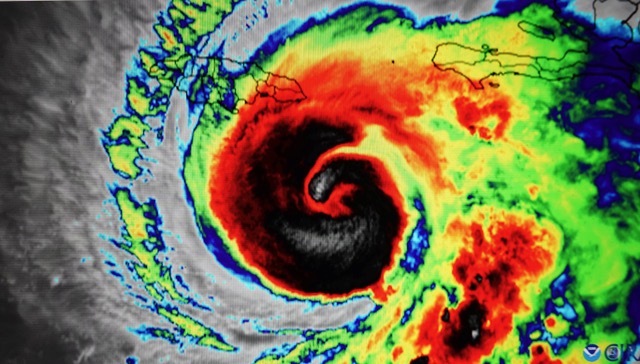
This past Halloween was notable for several things. One was the opening of the Frankenstein movie, and the other, of much greater consequence in most ways that matter, was the meanderings of one of the more powerful Caribbean hurricanes in history, the most powerful, in fact, to ever make landfall on the island of Jamaica, as the historical record goes. Word has just come down that it also set the new record for the highest wind gust ever recorded, as well, at 252 mph. If you’ve been paying attention, we are now in an era of record-smashing climate events, the geological age of the Anthropocene, whereby human activity has become the dominant influence on planetary climate and the environment, and things are not looking good.

The past week has seen the convening of the 30th annual UN Climate Change Conference, where the news is that we are almost certain to pass the ominous benchmark of a 1.5ºC increase in atmospheric temperature since Mary Shelley’s day. Some climate scientists claim, in fact, that this could happen within the next four years, as human use of fossil fuels continues to increase despite years of warnings and governmental promises to turn it all around.

There is a lot more to this story, and chances are you are more than familiar with it. If you are not, chances are even better that you will be sooner or later, as will we all, and it will be way beyond spooky, if any of the predictions turn out to be correct. Just ask anybody who was in Jamaica the past few weeks, and they’re not the only climate change victims for whom the chickens have already come home to roost, as the saying goes.

Pagans, and all of those who lived in ancient, simpler, and more ignorant times, worshiped nature. They saw the divine in the rocks and the stars, the weather and the seasons and all the creatures with whom they shared the earth. When they slew an animal for food, they’d say a prayer. They made offerings to their gods, knowing the gods were capricious, but it was always a good idea to acknowledge their power. They knew nature – the planet – would eventually prevail. Times have not changed, and this past Halloween, with all our spooky fun that mostly makes light of quaint largely forgotten beliefs, we received yet another powerful wake up call that the aos si or whatever you call the powers of nature are still out there, and they will prevail. With all our science and technological brilliance, we cannot outsmart them.

Mary Shelley set out to instill thrilling horror in her readers, in a way that was far beyond a simple ghost story (for one thing, there were no ghosts). Going way beyond spooky, she chose to toss in violence and injustice and high emotion, exotic locales and dark gothic elements and on a deeper level, questions about what is monstrous and what it means to be human, and it all worked superbly, if the test of time means anything.

Chances are she gave no thought to happenings on Mt Tambora or what horrific effect they had in certain parts of he world, where people went hungry, and worse. The indifferent workings of a planet’s geology and atmosphere are not exactly the stuff of human drama, until they are, for those unlucky enough to be victims of its worst effects. It should also be noted that only humans pay attention to such things, for the natural world, as far as we know, operates on a level of indifference. There are simply events, and time passes, and some living things die while others go on living. If that sounds cold, in some ways it is, so?

The world is currently awash in authors attempting to write the most effective expressions of what lies in store for humanity, as climate change steadily generates more chaos and damage and ultimately, horror. Some are journalists, some write fiction, while others give us screeds and warnings and jeremiads. Thus far the effects have been minimal on changing the direction in which we’ve long been headed. If Mary Shelley were around today, one can only wonder what kind of tale she might concoct, and if spooky would play any role, at all.

Or maybe it’s too soon to write off the power of spooky. For 55 years we’ve been bemoaning the environmental destruction of the planet and organizing movements and commitments to turn it all around on Earth Day, when millions or possibly billions of concerned folks from all over the globe take part. It was on Earth Day 2016 that the epic Paris Agreement was signed by 196 parties from around the planet, including most nation states, the big deal being a focus on limiting carbon dioxide emissions, with specifics about limiting global temperature rise, and getting it done sooner than later. The bemoaning in some of the previous paragraphs has lamented how poorly this is going, with no turnaround in sight.

This is not to besmirch Earth Day in the slightest. It is a certainty that things would be whole lot worse if nobody was paying attention to the problem, or not performing all the good work that the day for climate action inspires, when it comes around on the 22nd of April of each year. By the way, did you remember it this past year, and were you again inspired? If so, good for you! What’s that? It was off your radar? That’s okay, too! We all know that saving the planet is an ongoing effort, and dedication, whatever form that takes, is how the job will get done, if it gets done at all before it’s too late.

So is it possible that Earth Day, which started off with such a bang back in 1970, has lost some of its momentum? That for all its great intentions, in the current general consciousness it does not seem to be all that special? Could one say we’ve reached a point where it could use a little help? How about we pick a second day, there on the calendar, just to raise a bit more awareness?
How about we piggyback – and please don’t say it’s cheating, or co-opting (even if it is) – on a day remembered and eagerly anticipated by everybody, each and every year. A day with a grand and complicated history, with ancient roots that are all about worshipping and celebrating and respecting and even fearing nature, for one is a fool not to fear nature’s power, ready to wipe us all out as if we were nothing, if we disrespect it for too long, in the wrong ways. Would any serious Earth Day celebrant dare to quibble with that?
On this newly shared day we will not forget that we are an intelligent and technologically blessed post-Enlightenment species, while at the same time we will not look down our noses and dismiss magic and miracles, ancient beliefs about spirits and ghosts, witches and monsters, fairies and elves. It is past time to show a little humility and admit that ours is a world we might never completely understand, for all our modern intelligence and science and brilliance, and we should swallow our hubris and admit it.

On this day, which adults and children alike already celebrate by shape-shifting in all manner of costumes and disguises, we shall open up this practice to new possibilities. We can choose to make public our affinity with our spirit animals, for instance – hardly a new practice, while emphasizing it would help to make the transition more seamless. The practice could be readily expanded to include spirit insects, or trees, or whatever the hell in the natural world inspires us, and the message will be look at me! I’m a bear (or a butterfly or a redwood or a coral reef), behold me and celebrate!

And the current mania for yard decor, forever striving to attain the most effective melange of creepy and scary and fun – spooky in all its confusing glory – could explore new possibilities. The natural world is already making appearances on this stage with the advent of the giant spider, emblematic of the well known phobia that inspired a movie. Do passers by notice these oversized arachnids and experience full-blown trauma, their phobia gone wild? Do some think of Charlotte, and smile warmly, while others look back on all the gorgeous and mysterious real-life creatures they’ve observed in their lives, along with those marvelous webs? Nature is to be loved, and feared, and admired, in what amounts to what we know as awe.

And how about some inflatable orcas, and great white sharks, to swim amongst the current cast of yard characters that frankly are getting a bit tired? How about lions and tigers and bears, lurking in the rose bushes and behind the hedge? In line with current trends towards grossness, how about a polar bear devouring a seal? So many possibilities, fun and unnerving and perhaps a little thought-provoking in all the best ways. A very mixed message, when compared to the serious and important and totally earnest message of Earth Day, and watch out for the backlash from the army of Halloween traditionalists, a force to reckon with. All of which might make this new day especially special, as we dance on the decks of the Titanic, and would that be such a bad thing?